
Style Over Substance
Why I Won’t Be Watching “Wuthering Heights” Film

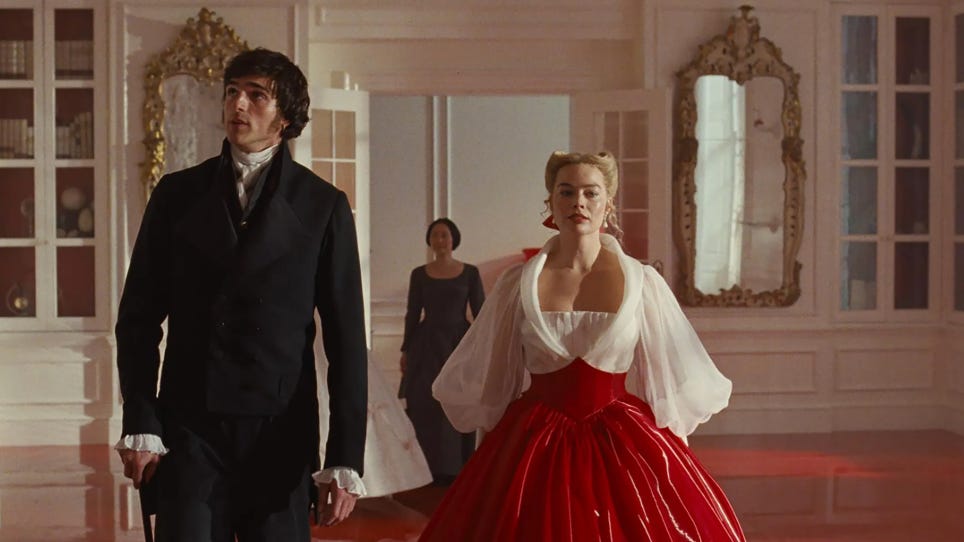
I am not a purist.
When I think about adaptations, whether they are for movies, TV shows or even books, I don’t expect a word-for-word, scene-by-scene book adaptation. If I wanted that, I would just read the original text. However, what I look for in adaptations is respect, spirit, and the essence of the book. I don’t mind seeing a different take on a book. I actually appreciate how creators can, for instance, take a classic story and depict it in a way that is more approachable to contemporary audiences. But what can definitely deter and infuriate is when creators attempt an adaptation or retelling and completely disregard the original text, forgetting what makes the classic so memorable.
That is what I feel is one of the many issues with the 2026 film “Wuthering Heights”
I first read Wuthering Heights in high school. It was not an easy read; in fact, it was one of my first difficult classic reads, both text and theme-wise. I never encountered such complex and unlikeable characters and thought-provoking themes. There was so much we dived into in our English class. But there was one aspect we all agreed on: this was not a love story. I attended an all-girls school, and not one of us thought the relationship between Catherine and Heathcliff was healthy, let alone romantic, or even considered Heathcliff a romantic hero. So, when I saw the trailer for the 2026 film, with the words “inspired by the greatest love story of all time” scrolling across, I knew I was going to have a problem with this adaptation.
I haven’t seen the movie, and with the many reviews I have read, both written and in video format, I knew if I tried to go see the film, I would not be a happy person. I don’t tend to listen to what others think; I try to form my own opinion. However, given the criticism I have seen, the way the movie is portrayed has confirmed my fears: it doesn’t capture the spirit of the novel. The whitewashing of characters, passing over the themes dealing with class and race, oversexualizing a story, covering only half of the book, these are just some of the issues I heard about. You expect changes when you adapt a book, but this? I have a hard time explaining what this is.
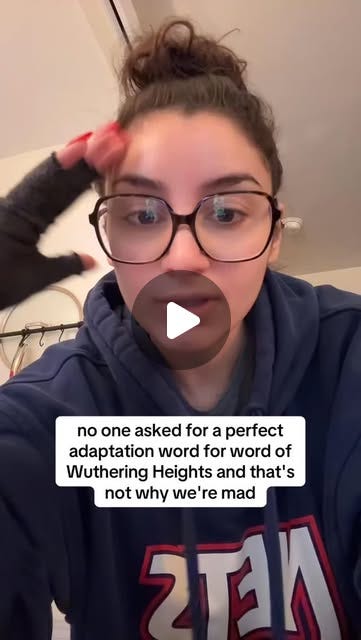
One of the many video criticisms I watched
Are readers complaining because it is not a word-for-word adaptation? Absolutely not. That would be a generalized complaint. People are upset because it looks like you are betraying what Brontë wrote. Yes, the interpretation of works can vary. But when you are basing it on the original text, using the original title, characters, setting, and plot, people are going to expect it to have some essence of the original. I believe that is one of the reasons why people are so angry. They didn’t recognize the book anywhere in the film. What frustrates me is, yes, the things I mentioned above, but the fact that it doesn’t appear that Fennell understood the novel. When asked why she didn’t choose to include the other half of the book, Fennell stated that Wuthering Heights is so “dense and complicated” that it would be hard to adapt for the movie screen. Then, why bother adapting it at all? Stating that it is too dense and complicated shows that you are not willing to tackle what made this book iconic. Just from the movie’s various scenes and Fennell’s interviews, all I saw was one thing: she didn’t read the book. You can excuse that of a 14-year-old (the interpretation of how she read the book when she was that age), but not for a grown-up, especially a director who is directing a book adaptation. She calls this film an interpretation…I interpret that she didn’t bother to truly read the book.
We can talk about this film ad nauseam, but I can mention a positive impact it’s having on getting people interested in the book. Wuthering Heights doesn’t get as much attention compared to other classics, nor is Emily Brontë as popular as her big sister, Charlotte. Print book sales have skyrocketed, and people are hosting book clubs and read-ins. It appears that this steamy remake has paid off. My fear is that people will be disappointed when they try to read the novel. Glossing over difficult topics and choosing style over substance not only demeans work but, in my opinion, also belittles the reader. Getting people to read the classics, let alone be interested in them, is a difficult task, but turning something into a bodice /BDSM ripper because you assume that is what everyone likes or it is trending now. Wuthering Heights is not an easy read, and I fear people will give up and assume all classics are like that.


The Original Is Always The Best
If you liked the movie, great. I hope you enjoyed the movie. But I highly recommend you read the book. The movie barely touches on the story’s true meaning, and reading is the only way to capture it. If you are going to begin reading Wuthering Heights, here are a few things to remember:
It is romantic, but not in the contemporary sense: The Romantic Era was more about unrepressed feelings and passionate self-expression. When you are reading this story, don’t think about romantic love in the sense of the romantic tropes we see in contemporary novels.
The text is not easy to follow, but you shouldn’t give up. Take your time. The Yorkshire dialect of some of the characters is one of the novel’s unique features. It will be difficult to read, but you shouldn’t feel frustrated. You will also have to get used to the extensive (and sometimes confusing) family tree, which can be frustrating to read. And if this is your first time writing a classic since high school and college, it will take time to get used to the writing style. It is something that you are not usually used to. Just take your time and use some of the tips that I recommended to help you tackle it.
Read literary criticism. Some academic criticism can be dry and intimidating, but it is enriching to get a more in-depth look and understanding of the classic. You can visit your local library and use the free databases, like Gale Literature and JSTOR, to look up literary criticism on Wuthering Heights. Reading other people’s insights can help you broaden your horizon.
Read contemporary adaptations and diverse retellings. Not all adaptations are bad, as long as they are done well. Reading other book adaptations will enhance your understanding and appreciation of the work, particularly if they are diverse retellings. Here are a few that you should definitely try:


Wuthering Heights: A Retelling by Tanya Landman
Catherine: A Retelling by Essie Fox
Catherine The Ghost by Kathe Koja
For No Mortal Creature by Keshe Chow
What Souls Are Made Of by Tasha Suri
NOTE: Most blogposts includes affiliate links, which means we earn a small commission (at no extra cost to you) if you buy through them
I'm not watching it either.
Well said! I will probably still see the adaptation because I am too curious not to, but I can almost guarantee I won't like it (I almost never like adaptations, even when they are much truer to the story!) But yeah, this one feels especially disappointing.